

.svg)
.svg)
.svg)
.avif)
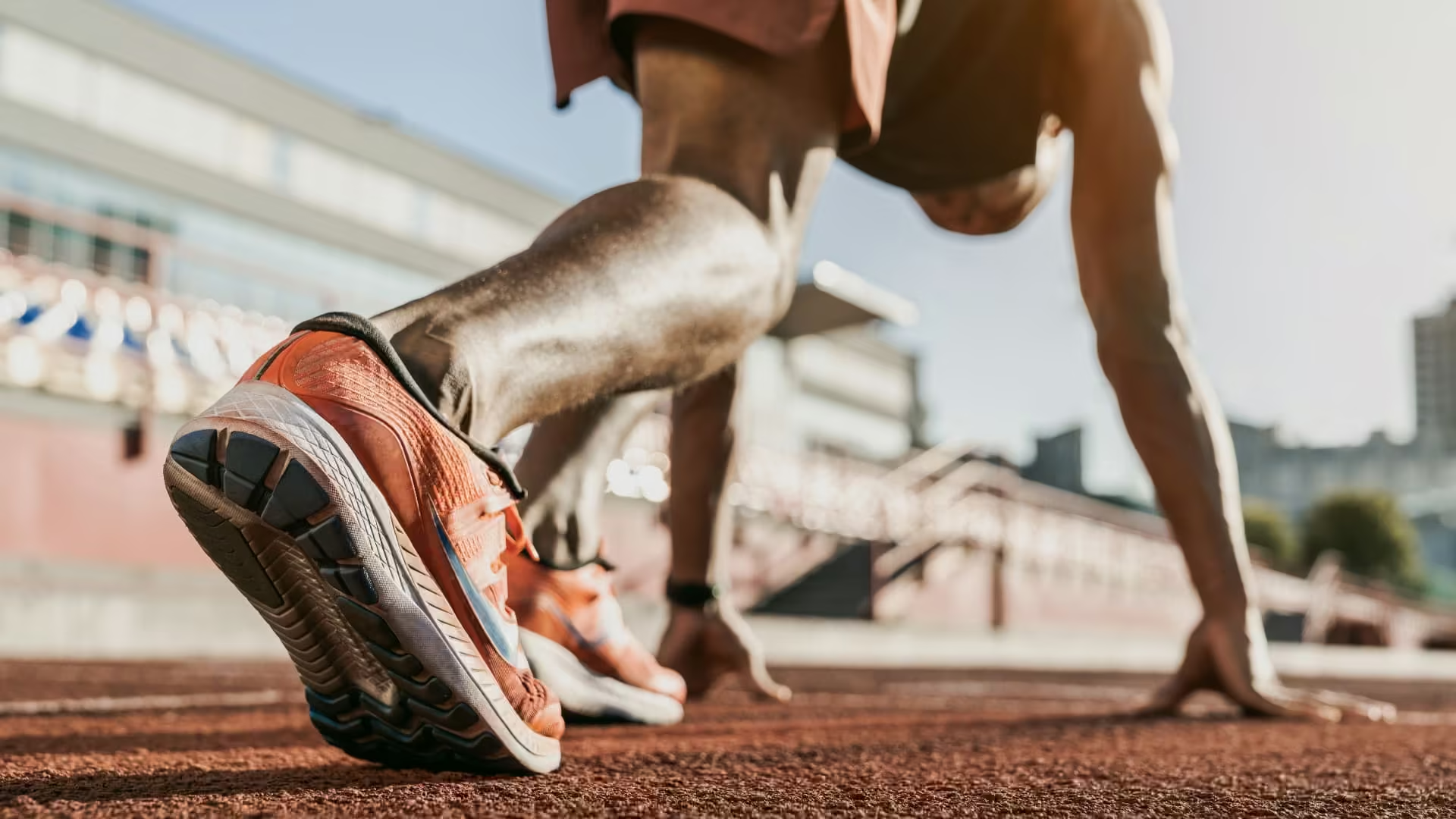
If you are an athlete with foot or ankle surgery on the horizon, you probably have one specific question on your mind: When can I get back to my sport? The honest answer depends on the procedure, the injury being treated, and how your foot or ankle responds during rehabilitation. However, in most cases, athletes can return to play within three to six months. Having the right rehabilitation program and considering when regenerative therapies can help both play a factor in the speed of recovery.
What is important to understand about returning to sports after surgery is that returning too soon can expose healing tissues to forces they are not ready to handle. Continue reading to learn how the best foot and ankle specialist in Los Angeles evaluates recovery based on function, strength, and sport-specific demands to help athletes recover to pre-injury levels of performance.
How Long Does It Take to Return to Sports After Foot or Ankle Surgery?
There is no single recovery timeline for surgery involving the foot or ankle joint. Instead, the best foot and ankle surgeons in West Los Angeles rely on initially restricting weight-bearing while tissues heal, followed by progressive mobility, strengthening, and functional training. For an active athlete, a typical recovery may look something like this:
It’s important to remember that these phases can overlap, and some athletes move through them faster or slower than others. Also, pain-free walking is not the same as being ready to compete. You might walk normally while still lacking the strength or neuromuscular control needed to land from a jump, cut around an opponent, or push off repeatedly.
What Should You Be Able to Do Before Returning to Play?
Before clearing an athlete for unrestricted sports, the best foot and ankle specialist in West LA looks beyond pain levels to assess how well you’re able to meet certain milestones. Depending on your procedure and sport, this may include:
- Walk and run without significant pain or altered mechanics
- Move the ankle through an appropriate range of motion
- Restore strength in the calf, foot and surrounding muscles
- Balance on the surgical leg
- Jump and land with good control
- Accelerate and decelerate safely
- Change direction without instability
- Complete sport-specific drills
- Tolerate progressively greater training loads
Your ability to perform one movement in the clinic does not necessarily predict how your foot or ankle will respond after an hour of practice. Conditioning and gradual workload exposure are part of the return-to-sport process.
Types of Foot or Ankle Surgeries That Change the Recovery Timeline
The procedure and the tissue being treated can greatly affect recovery. For example, an ankle arthroscopy specialist in West LA uses minimally invasive techniques for certain conditions, but minimally invasive surgery may still involve repairing or treating structures that require a longer healing period or more extensive rehabilitation. Some general differences among common surgeries include:
Can Following a Rehabilitation Program Help You Return to Sports Faster?
Rehab after surgery is important, as it helps athletes progress from small movements toward improving balance, strength, and sport-specific activity. Working with a physical therapist and the best sports medicine podiatrist in Los Angeles together is best for athletes who want a rehab program that can be adjusted according to swelling, strength, movement quality, and how your foot or ankle responds to increased workload.
How Can Regenerative Therapies Help After Foot or Ankle Surgery?
Regenerative therapies can help certain athletes recover after foot or ankle surgery, particularly when the goal is to support tissue recovery or address persistent symptoms during rehabilitation. Platelet-rich plasma (PRP), for example, uses concentrated components from the patient's own blood and has been studied as an adjunct to surgical treatment of tendon, ligament, and cartilage problems.
However, regenerative therapies are not a substitute for proper surgical healing or rehabilitation, and the evidence varies significantly depending on the procedure and condition. Before deciding if regenerative treatments are right for you, the best foot and ankle surgeon in West LA will consider factors such as the tissue involved, surgical procedure, healing progress, activity goals, and any ongoing pain or inflammation before recommending a regenerative treatment.
Where to Find the Best Foot and Ankle Surgeon in West LA for Sports Injuries
Returning to sports after foot or ankle surgery is a process that requires expertise in healing, strength, movement quality, and progressively greater demands.
KIN Foot and Ankle offers expert sports medicine surgery and recovery plans guided by Dr. Megan Ishibashi, who brings fellowship training in foot and ankle reconstruction and sports medicine, along with advanced experience in arthroscopy and minimally invasive techniques. Her background as a competitive athlete gives her firsthand insight into how much it matters to get back to the activities you care about, and our goal is to build a recovery plan that respects both the biology of healing and the demands of your sport.
Ready to see the best foot and ankle surgeon in West LA for effective treatment of your injury and a personalized recovery program that gets you back into your sport quickly and safely?


.svg)
.svg)
.svg)
